Skip to content
Seven Medicine

Women's health · Perimenopause & menopause

Perimenopause and menopause, with more support than “just push through it”

Hot flashes, night sweats, broken sleep, irritability, brain fog, a cycle that's suddenly unpredictable — the transition can last years. We offer personalized support for how it's showing up for you.
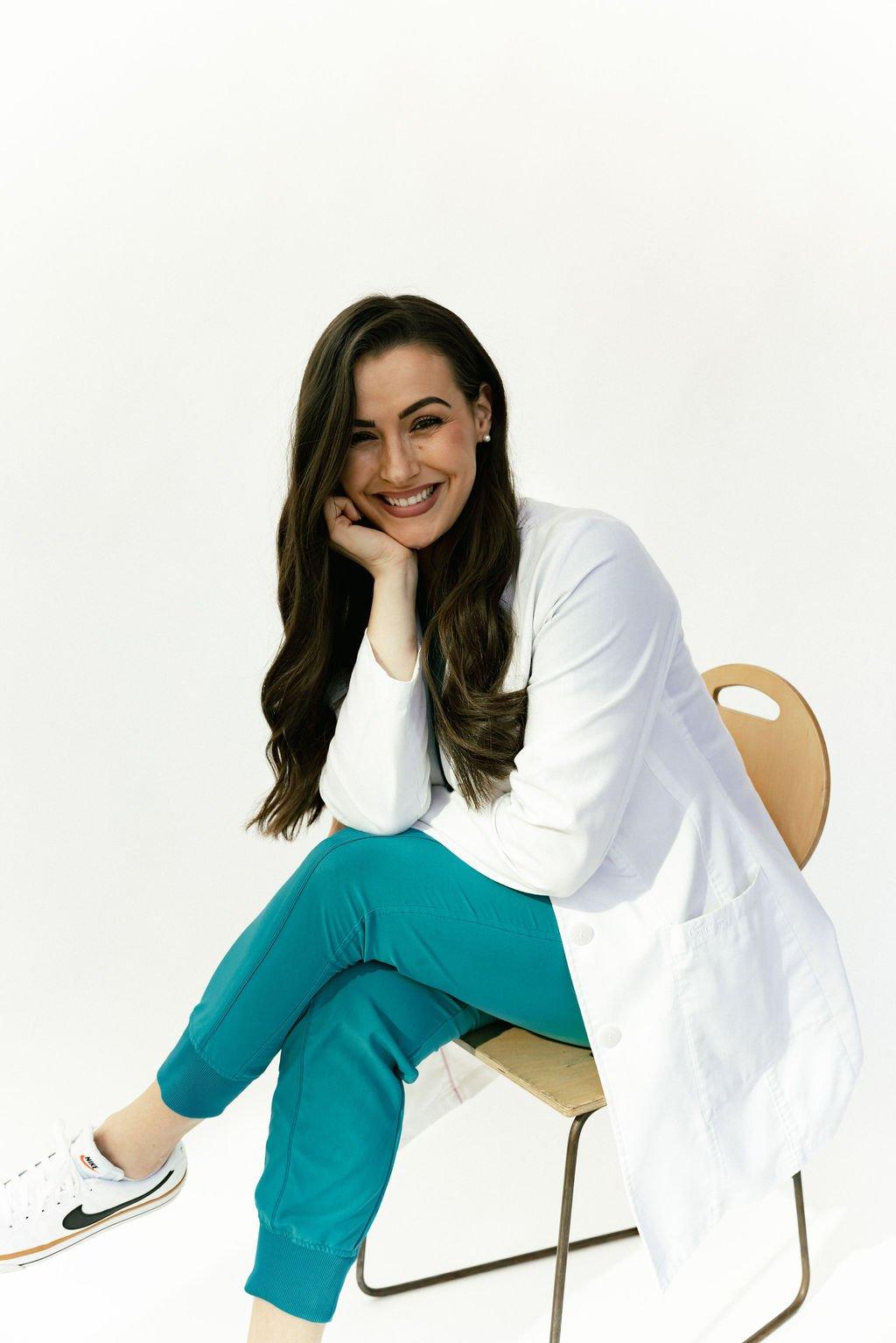
Dr. Kristina Gacesa, licensed acupuncturist, seated in a white coat and smiling

Does this sound familiar?

What we hear from patients

  • “I'm not sleeping, I'm hot all the time, and I don't feel like myself.”
  • “My labs look normal, but I still don't feel normal.”
  • “I wake up at 3 a.m. every night, drenched.”
  • “My moods are all over the place and I'm not sure why.”

Concerns we commonly support

  • Hot flashes and night sweats
  • Sleep disruption
  • Irritability, anxiety and low mood
  • Brain fog and fatigue
  • Irregular cycles in perimenopause
  • Joint aches

How Dr. Kristina explains it

You'll hear both the Traditional Chinese Medicine view and the familiar medical view, so you understand what we're doing and why.

The TCM view

Traditional Chinese Medicine often describes menopausal heat symptoms in terms of Yin deficiency — not enough of the body's cooling, moistening aspect — frequently alongside Liver Qi stagnation. Treatment and food therapy aim to support that pattern.

The medical view

Biomedically, perimenopause involves fluctuating and then declining ovarian hormones, affecting thermoregulation, sleep and mood. Hormone therapy and other medical options are appropriate for many women. Acupuncture can be used alongside those options or by women who prefer or are unable to use them, after discussion with their physician.

Your care at Seven Medicine

How treatment is personalized

How long care usually takes

Many plans begin with weekly visits for six to eight weeks, then taper based on response. Your symptom log guides decisions about frequency.

  1. 01

    Symptom-tracked plan

    We track hot-flash frequency, sleep and mood so changes are visible over time — not just a vague impression.

  2. 02

    Sleep-first support

    Sleep often improves everything else. Treatment and lifestyle guidance prioritize it.

  3. 03

    Food therapy

    Cooling, nourishing food principles from TCM — plus practical habits around alcohol, caffeine and meal timing that many women find relevant.

  4. 04

    Works with HT or without

    Whether or not you use hormone therapy, care is coordinated with your physician's plan.

Research

What the research says

We summarize the highest-quality research we can find — systematic reviews, Cochrane reviews, guidelines and large trials — including results that don't favor acupuncture. You deserve the full picture.

Reviewed October 2026. Research describes groups of people, not guarantees for any individual. Explore the research →

Hot flashes

Pragmatic trials have found real-world improvement: in a US trial, hot-flash frequency fell by 36.7% at six months with acupuncture versus no acupuncture, and an Italian trial in women with breast cancer found benefit when added to self-care. However, a Cochrane review found no significant difference between real and sham acupuncture, and acupuncture appeared less effective than hormone therapy.

5 sources
  1. [1]Avis NE, Coeytaux RR, Isom S, et al. Acupuncture in Menopause (AIM) study: a pragmatic, randomized controlled trial. Menopause. 2016;23(6):626-37. PubMed 27023860 (opens in a new tab) · DOI 10.1097/GME.0000000000000597 (opens in a new tab)· randomized controlled trial (pragmatic, waitlist-controlled)
  2. [2]Lesi G, Razzini G, Musti MA, et al. Acupuncture As an Integrative Approach for the Treatment of Hot Flashes in Women With Breast Cancer: A Prospective Multicenter Randomized Controlled Trial (AcCliMaT). J Clin Oncol. 2016;34(15):1795-802. PubMed 27022113 (opens in a new tab) · DOI 10.1200/JCO.2015.63.2893 (opens in a new tab)· randomized controlled trial (pragmatic)
  3. [3]Dodin S, Blanchet C, Marc I, et al. Acupuncture for menopausal hot flushes. Cochrane Database Syst Rev. 2013;2013(7):CD007410. PubMed 23897589 (opens in a new tab) · DOI 10.1002/14651858.CD007410.pub2 (opens in a new tab)· Cochrane systematic review
  4. [4]Liu C, et al. Effect of acupuncture on menopausal hot flushes and serum hormone levels: a systematic review and meta-analysis. Acupunct Med. 2022;40(4):289-298. PubMed 34894774 (opens in a new tab) · DOI 10.1177/09645284211056655 (opens in a new tab)· systematic review and meta-analysis
  5. [5]The 2023 Nonhormone Therapy Position Statement Advisory Panel The 2023 nonhormone therapy position statement of The North American Menopause Society. Menopause. 2023;30(6):573-590. PubMed 37252752 (opens in a new tab) · DOI 10.1097/GME.0000000000002200 (opens in a new tab)· clinical position statement

Insomnia

A Cochrane review found evidence too low-quality to support or refute acupuncture for insomnia. A 2025 Cochrane review in people with cancer found it may help versus no treatment but may make little difference versus sham, and was likely less effective than CBT-I — which remains the recommended first-line treatment.

2 sources
  1. [1]Cheuk DK, Yeung WF, Chung KF, et al. Acupuncture for insomnia. Cochrane Database Syst Rev. 2012;2012(9):CD005472. PubMed 22972087 (opens in a new tab) · DOI 10.1002/14651858.CD005472.pub3 (opens in a new tab)· Cochrane systematic review
  2. [2]Ma Q, Liu C, Zhao G, et al. Acupuncture for insomnia in people with cancer. Cochrane Database Syst Rev. 2025;12(12):CD015177. PubMed 41347621 (opens in a new tab) · DOI 10.1002/14651858.CD015177.pub2 (opens in a new tab)· Cochrane systematic review

From Seven Medicine

Patient stories

Shared with names and identifying details removed.

Patient story · Longer-standing, whole-body concerns

Sleep, night sweats, fatigue and cycle changes — all at once

Where they started
A patient came in with several symptoms that had built up over a long time: disrupted sleep, night sweats, fatigue, stress and changes in their cycle.
The plan
Dr. Kristina recommended more consistent visits at the start, individualized food and lifestyle suggestions, and a reassessment after about the first month — alongside the patient's medical care.
Over time
Progress came gradually and wasn't a straight line. As sleep and the other symptoms settled, visits were spaced further apart.

When several longstanding symptoms overlap, care is often more consistent at first, then reduced as things improve.

Individual results vary. These stories describe individual patients and are not typical or guaranteed outcomes.

Patient experiences

In patients’ words

Kristina is amazing! I was having a terrible time with my pregnancy. After just one visit, I felt so much better. When I saw my husband afterwards, his first words were, “you look different!” I felt different. I suddenly felt empowered. Better yet, all the symptoms that had really been plaguing me for weeks cleared right up! I highly recommend Kristina for all your acupuncture needs!
Patient review
Ms. Gacesa is highly skilled in and knowledgeable about traditional oriental medicine and approaches patients in a holistic manner, bringing deep experience and her intuition together with her training to provide comprehensive treatment plan. In two weeks, I feel like a new person and better than I could have hoped for.
Patient review
Overall this was a great experience. It was my first time with acupuncture but the benefits were noticed almost immediately! Kristina is very knowledgeable and educated about this practice which makes you feel comfortable with the entire experience. The intake was thorough so she can be person centered for everyone that comes to her. I had neck pain and 1 day later I feel a definite improvement. Will definitely go back!
Patient review

Individual experiences vary. Testimonials reflect personal experiences, not typical or guaranteed results.

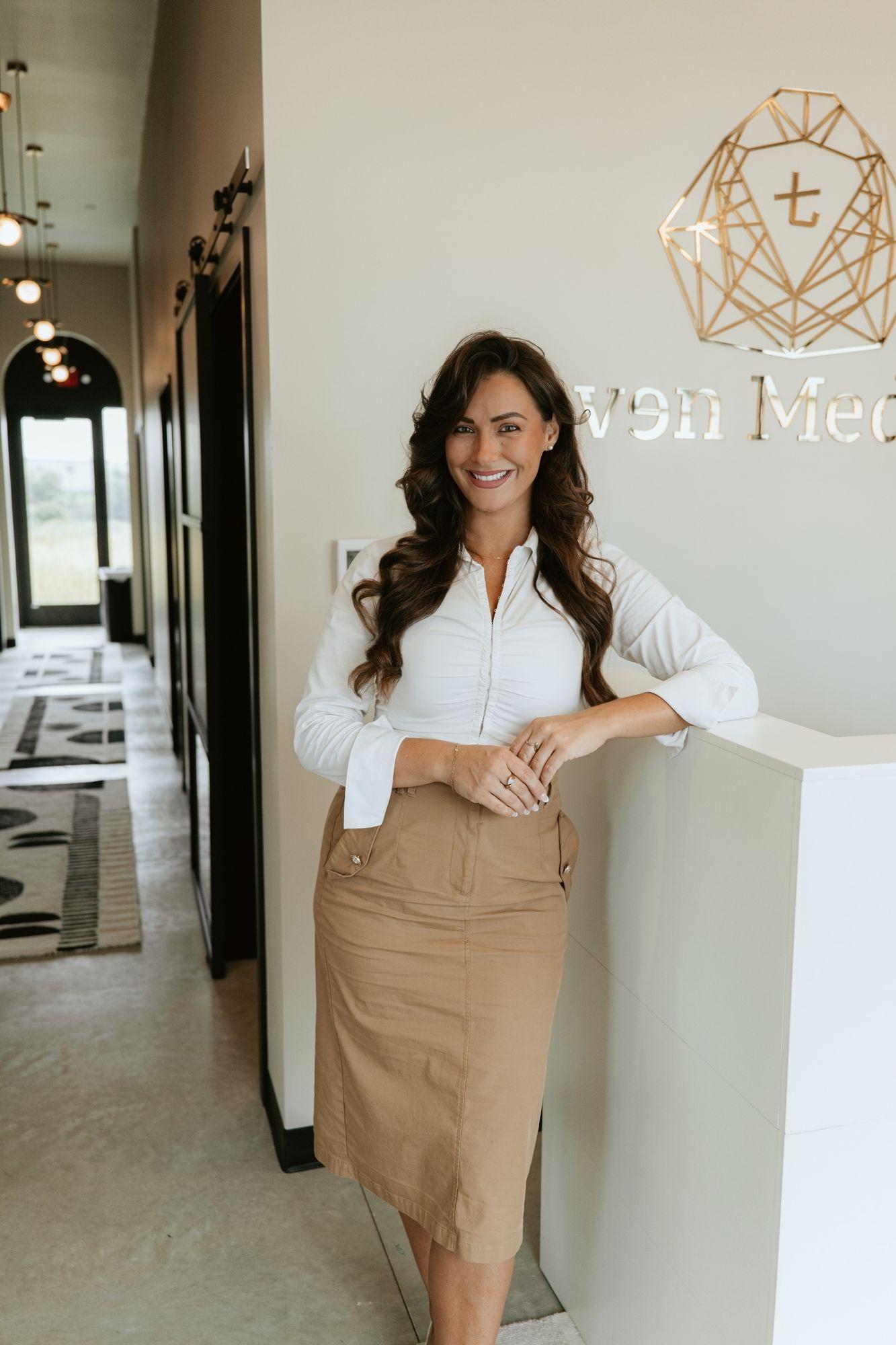
Dr. Kristina Gacesa smiling at the Seven Medicine front desk

Meet your practitioner

Dr. Kristina Gacesa

DAcCHM, M.CM, L.Ac., Dipl. Ac.

Dr. Kristina completed her Doctorate in Acupuncture and Traditional Chinese Herbal Medicine as valedictorian, summa cum laude, after earning master’s degrees in both acupuncture and Traditional Chinese Medicine. Her clinical training spans hospital and rehabilitation settings in Minnesota and clinical study in Zhengzhou, China.

She explains your care in both TCM and familiar medical terms, so you understand what she’s seeing, why she recommends what she does, and how you’ll know if it’s working.

Dr. Kristina holds a clinical doctorate in acupuncture and Chinese herbal medicine. She is a licensed acupuncturist, not a medical physician (MD/DO), and works alongside — not in place of — your medical team.

FAQ

Perimenopause & menopause questions

Can I do acupuncture if I'm on hormone therapy?

Yes. Acupuncture can be used alongside hormone therapy. Let Dr. Kristina know about all medications and supplements you take.

Is there evidence for hot flashes?

Some trials suggest acupuncture may reduce hot-flash frequency or bother for some women, while other studies, including sham-controlled trials, show smaller or uncertain differences. See the research summary on this page.

When should I see my doctor instead?

See your physician for any bleeding after menopause (12 months without a period), very heavy bleeding, or symptoms that are severe or new. Acupuncture complements that care.

View all FAQs

Still have questions?

or call(507) 258-7771

Initial consultation · 30 minutes

Start with a conversation.

Your first visit is a 30-minute consultation with Dr. Kristina Gacesa: your history, a TCM assessment, an AcuGraph baseline and a personalized recommendation with exact pricing. No treatment plan is required to book.

$49.99

Introductory rate · normally $249.99 · through Dec 31, 2026

If you continue: $159.99/visit, or $129.99/visit on a treatment plan.

Book initial consultation (opens in a new tab)

Have a question first? or call (507) 258-7771

CallBook consultation (opens in a new tab)