Skip to content
Seven Medicine

Conditions · Nervous system

For when you're always “on” and can't come down

Tight chest, racing thoughts, shallow sleep, a body that won't settle. Many patients describe acupuncture as one of the few hours in their week when their nervous system downshifts. We use that as part of an integrated plan for stress regulation and wellbeing.
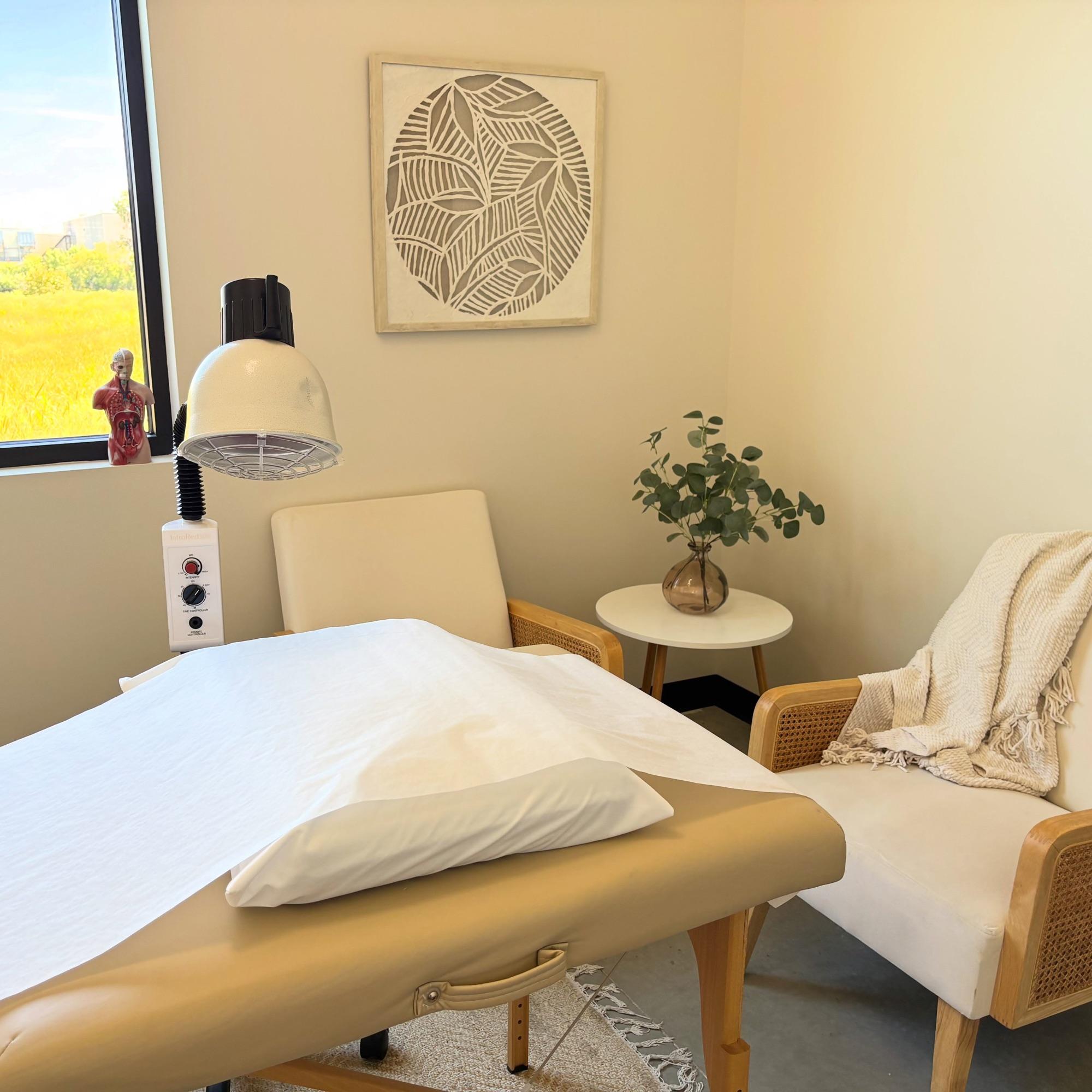
Seven Medicine treatment room with a large window, treatment table and rattan armchairs

Does this sound familiar?

What we hear from patients

  • “I feel wired all the time and I can't turn it off.”
  • “I'm exhausted but can't sleep.”
  • “My stress lives in my shoulders and my stomach.”
  • “I'm doing therapy and want something for my body too.”

Concerns we commonly support

  • Chronic stress and burnout
  • Anxiety symptoms
  • Difficulty relaxing
  • Stress-related tension, headaches and digestive upset
  • Sleep problems

How Dr. Kristina explains it

You'll hear both the Traditional Chinese Medicine view and the familiar medical view, so you understand what we're doing and why.

The TCM view

Traditional Chinese Medicine describes stress patterns in terms such as Liver Qi stagnation and disturbances of the Shen (the mind/spirit). These terms describe how stress shows up physically — in digestion, sleep, menstrual cycles and muscle tension.

The medical view

Biomedically, chronic stress keeps the sympathetic ('fight or flight') system activated. Acupuncture is studied for effects on autonomic balance and anxiety symptoms. It's best seen as one tool within a broader plan that may include therapy, medication, movement and sleep care.

Your care at Seven Medicine

How treatment is personalized

How long care usually takes

Many patients start weekly, then space visits out as they find their footing. Your plan adjusts to life's demands.

  1. 01

    Time to rest

    Calm, unhurried sessions that give your body a chance to relax.

  2. 02

    Body-symptom focus

    Tension, digestion, sleep and cycle changes that come with stress are addressed directly.

  3. 03

    Daily practices

    Breathing, sleep routines, movement and food habits that are realistic for your schedule, with follow-up.

  4. 04

    Works with your mental-health care

    Acupuncture complements — never replaces — therapy or psychiatric care.

Research

What the research says

We summarize the highest-quality research we can find — systematic reviews, Cochrane reviews, guidelines and large trials — including results that don't favor acupuncture. You deserve the full picture.

Reviewed October 2026. Research describes groups of people, not guarantees for any individual. Explore the research →

Anxiety

Reviews suggest acupuncture may reduce anxiety symptoms, with side effects similar to control treatments, and a 2026 meta-analysis of 12 trials reported a benefit. Study designs vary widely and high-quality sham-controlled evidence is limited. Best viewed as a complement to established anxiety care.

2 sources
  1. [1]Amorim D, Amado J, Brito I, et al. Acupuncture and electroacupuncture for anxiety disorders: A systematic review of the clinical research. Complement Ther Clin Pract. 2018;31:31-37. PubMed 29705474 (opens in a new tab) · DOI 10.1016/j.ctcp.2018.01.008 (opens in a new tab)· systematic review
  2. [2]Wang D, Sun J, Chuan EY, et al. Efficacy and Safety of Acupuncture for Anxiety Disorders in Adults: A Systematic Review and Meta-Analysis. Psychiatry Investig. 2026;23(8):963-975. PubMed 42613003 (opens in a new tab) · DOI 10.30773/pi.2025.0437 (opens in a new tab)· systematic review and meta-analysis

Insomnia

A Cochrane review found evidence too low-quality to support or refute acupuncture for insomnia. A 2025 Cochrane review in people with cancer found it may help versus no treatment but may make little difference versus sham, and was likely less effective than CBT-I — which remains the recommended first-line treatment.

2 sources
  1. [1]Cheuk DK, Yeung WF, Chung KF, et al. Acupuncture for insomnia. Cochrane Database Syst Rev. 2012;2012(9):CD005472. PubMed 22972087 (opens in a new tab) · DOI 10.1002/14651858.CD005472.pub3 (opens in a new tab)· Cochrane systematic review
  2. [2]Ma Q, Liu C, Zhao G, et al. Acupuncture for insomnia in people with cancer. Cochrane Database Syst Rev. 2025;12(12):CD015177. PubMed 41347621 (opens in a new tab) · DOI 10.1002/14651858.CD015177.pub2 (opens in a new tab)· Cochrane systematic review

From Seven Medicine

Patient stories

Shared with names and identifying details removed.

Patient story · Longer-standing, whole-body concerns

Sleep, night sweats, fatigue and cycle changes — all at once

Where they started
A patient came in with several symptoms that had built up over a long time: disrupted sleep, night sweats, fatigue, stress and changes in their cycle.
The plan
Dr. Kristina recommended more consistent visits at the start, individualized food and lifestyle suggestions, and a reassessment after about the first month — alongside the patient's medical care.
Over time
Progress came gradually and wasn't a straight line. As sleep and the other symptoms settled, visits were spaced further apart.

When several longstanding symptoms overlap, care is often more consistent at first, then reduced as things improve.

Individual results vary. These stories describe individual patients and are not typical or guaranteed outcomes.

Patient experiences

In patients’ words

Overall this was a great experience. It was my first time with acupuncture but the benefits were noticed almost immediately! Kristina is very knowledgeable and educated about this practice which makes you feel comfortable with the entire experience. The intake was thorough so she can be person centered for everyone that comes to her. I had neck pain and 1 day later I feel a definite improvement. Will definitely go back!
Patient review
Deeply safe and relaxing environment, Kristina is very competent and knowledgeable. I had some anxiety around acupuncture and after my first session I was completely amazed. The herbs she recommended have been a game changer as well!
Patient review
Kristina is amazing—I was treated with acupuncture and fire cupping. She is knowledgeable, professional, and caring. She made sure that I felt comfortable throughout my entire appointment! I will definitely continue going to her for future visits!
Patient review

Individual experiences vary. Testimonials reflect personal experiences, not typical or guaranteed results.

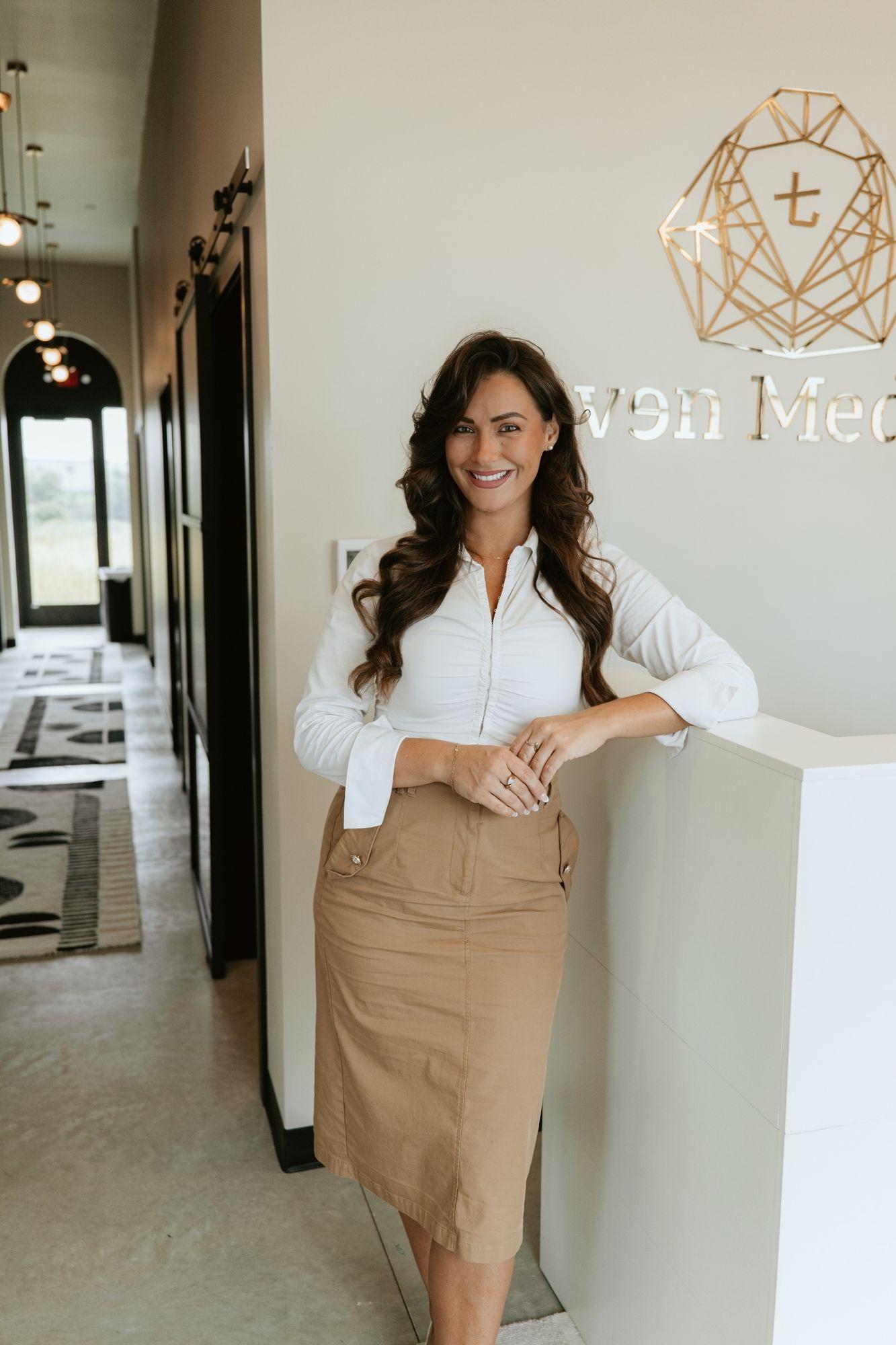
Dr. Kristina Gacesa smiling at the Seven Medicine front desk

Meet your practitioner

Dr. Kristina Gacesa

DAcCHM, M.CM, L.Ac., Dipl. Ac.

Dr. Kristina completed her Doctorate in Acupuncture and Traditional Chinese Herbal Medicine as valedictorian, summa cum laude, after earning master’s degrees in both acupuncture and Traditional Chinese Medicine. Her clinical training spans hospital and rehabilitation settings in Minnesota and clinical study in Zhengzhou, China.

She explains your care in both TCM and familiar medical terms, so you understand what she’s seeing, why she recommends what she does, and how you’ll know if it’s working.

Dr. Kristina holds a clinical doctorate in acupuncture and Chinese herbal medicine. She is a licensed acupuncturist, not a medical physician (MD/DO), and works alongside — not in place of — your medical team.

FAQ

Stress & anxiety questions

Can acupuncture treat anxiety or depression?

Some research suggests acupuncture may help anxiety symptoms, but anxiety and depression should be evaluated and treated by qualified mental-health professionals. We offer acupuncture as a complement to that care.

I'm anxious about needles. Is that a problem?

Very common — and not a problem. Needles are hair-thin, Dr. Kristina explains everything first, and you can pause at any time. Many needle-anxious patients find the experience calmer than expected.

View all FAQs

Still have questions?

or call(507) 258-7771

Initial consultation · 30 minutes

Start with a conversation.

Your first visit is a 30-minute consultation with Dr. Kristina Gacesa: your history, a TCM assessment, an AcuGraph baseline and a personalized recommendation with exact pricing. No treatment plan is required to book.

$49.99

Introductory rate · normally $249.99 · through Dec 31, 2026

If you continue: $159.99/visit, or $129.99/visit on a treatment plan.

Book initial consultation (opens in a new tab)

Have a question first? or call (507) 258-7771

CallBook consultation (opens in a new tab)