
The TCM view
In Traditional Chinese Medicine, the time you wake, how your mind feels at night, night sweats, dreams and digestion all help distinguish sleep patterns — which is why two people with insomnia may receive different treatment.
Conditions · Sleep
Does this sound familiar?
The TCM view
In Traditional Chinese Medicine, the time you wake, how your mind feels at night, night sweats, dreams and digestion all help distinguish sleep patterns — which is why two people with insomnia may receive different treatment.
The medical view
Biomedically, insomnia is often maintained by hyperarousal and habits around sleep. Cognitive behavioral therapy for insomnia (CBT-I) is a first-line treatment. Acupuncture is studied as a complementary approach, and conditions like sleep apnea should be ruled out with your physician.
Your care at Seven Medicine
How long care usually takes
Patients often begin weekly. We track sleep onset, waking and daytime energy so we can judge progress honestly.
01
Points and recommendations are matched to how your sleep is actually disrupted.
02
Light, timing, caffeine, alcohol and wind-down habits — simple, sustainable and followed up.
03
Hormonal shifts, pain, stress and digestion are often part of the sleep picture and are addressed together.
Research
Reviewed October 2026. Research describes groups of people, not guarantees for any individual. Explore the research →
A Cochrane review found evidence too low-quality to support or refute acupuncture for insomnia. A 2025 Cochrane review in people with cancer found it may help versus no treatment but may make little difference versus sham, and was likely less effective than CBT-I — which remains the recommended first-line treatment.
From Seven Medicine
Patient story · Longer-standing, whole-body concerns
When several longstanding symptoms overlap, care is often more consistent at first, then reduced as things improve.
Individual results vary. These stories describe individual patients and are not typical or guaranteed outcomes.
Patient experiences
Individual experiences vary. Testimonials reflect personal experiences, not typical or guaranteed results.
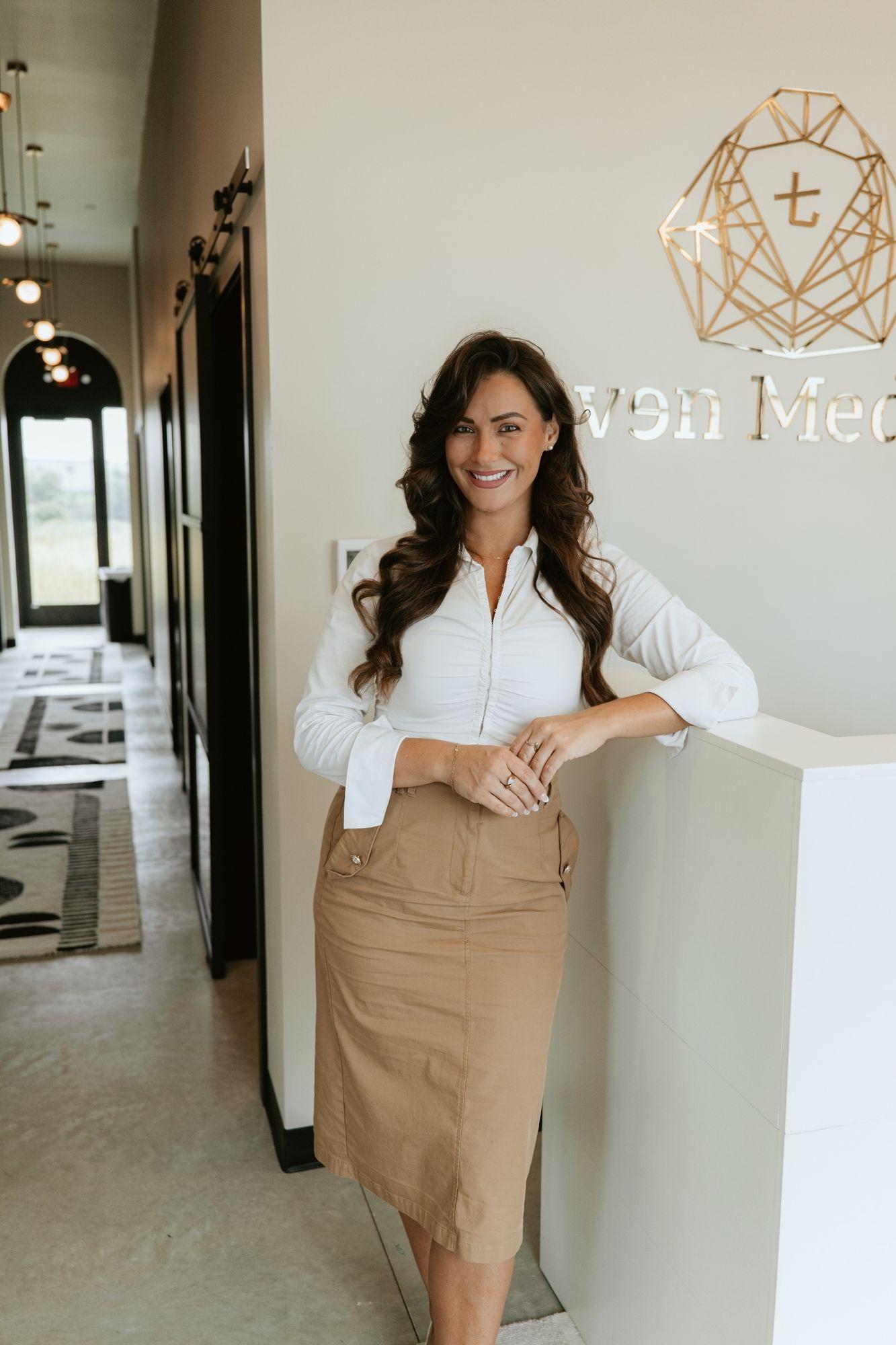
Meet your practitioner
DAcCHM, M.CM, L.Ac., Dipl. Ac.
Dr. Kristina completed her Doctorate in Acupuncture and Traditional Chinese Herbal Medicine as valedictorian, summa cum laude, after earning master’s degrees in both acupuncture and Traditional Chinese Medicine. Her clinical training spans hospital and rehabilitation settings in Minnesota and clinical study in Zhengzhou, China.
She explains your care in both TCM and familiar medical terms, so you understand what she’s seeing, why she recommends what she does, and how you’ll know if it’s working.
Dr. Kristina holds a clinical doctorate in acupuncture and Chinese herbal medicine. She is a licensed acupuncturist, not a medical physician (MD/DO), and works alongside — not in place of — your medical team.
FAQ
If you snore loudly, stop breathing during sleep, or have significant daytime sleepiness, talk with your physician about a sleep evaluation. Acupuncture does not treat sleep apnea.
Yes. Don't change medications without your prescriber. Acupuncture can be used alongside your current plan.
Still have questions?
or call(507) 258-7771